
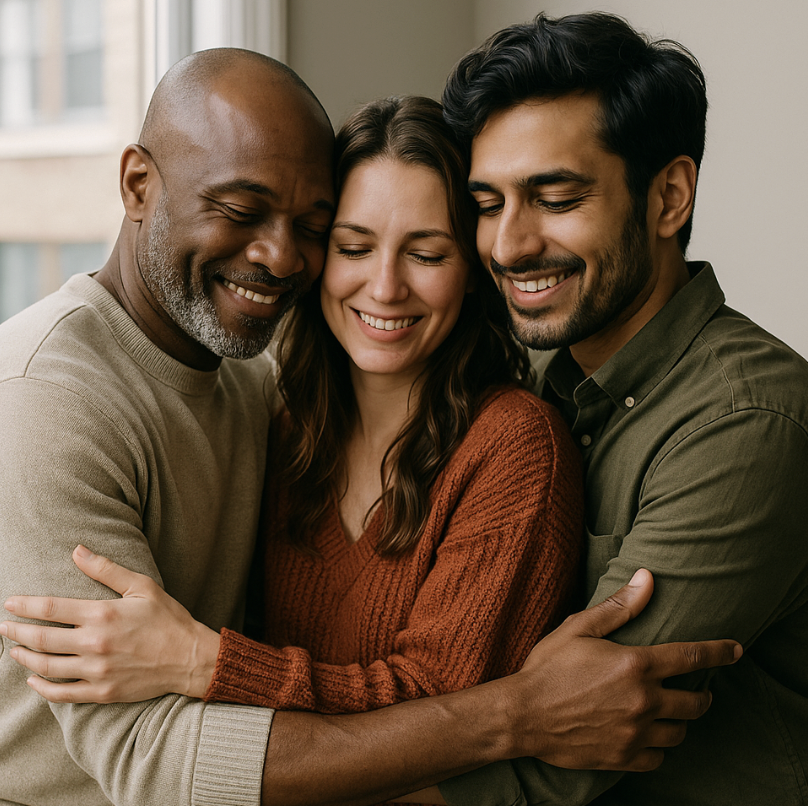
Polyamory is often pictured as the domain of younger people exploring love and freedom. But more adults are embracing polyamory later in life—sometimes after decades of monogamy, sometimes as lifelong non-monogamists continuing their journey. Aging in polyamory comes with both challenges and unique opportunities.
Midlife and beyond often bring new priorities—companionship, emotional support, intimacy without rigid scripts. Polyamory offers a way to find all of these through multiple meaningful connections.
For older adults, polyamory can provide a broader “chosen family,” creating a web of care that extends beyond traditional marriage or children.
Many people discover polyamory after life transitions. With fewer societal expectations or family pressures, they feel freer to explore love without limits.
Sexual health, chronic illness, and energy levels may play a bigger role, making communication about needs and limits essential.
Older polyamorous people often face double stigma: one for being non-monogamous, another for breaking expectations of how people “should” age.
Dating younger partners or navigating communities dominated by younger folks can sometimes create cultural disconnects.