
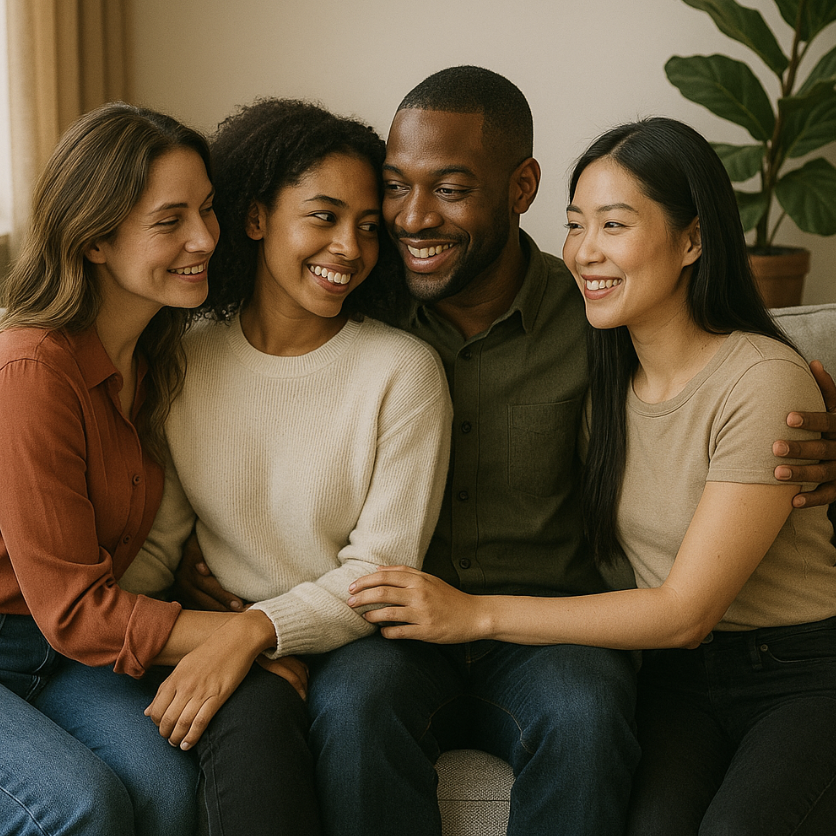
While the word polyamory is fairly new, the practice of loving more than one person openly has existed in many forms across cultures and history. Each society has had its own way of approaching love, intimacy, and family structures—some surprisingly similar to what we now call polyamory.
Polygamy (one person with multiple spouses) has long been part of cultural and religious traditions. While different from modern polyamory—since it often involved hierarchy—it reflects the idea that love and partnership can extend beyond two people.
Polyamory as we know it grew during the 1960s counterculture and gained visibility in the 1990s, especially in LGBTQ+ communities.
Today, polyamory is increasingly discussed in media, books, and therapy, normalizing it as a legitimate relationship choice.
Unlike polygamy or arranged multi-partner marriages, polyamory emphasizes freedom, consent, and equality. Each partner chooses their relationships, and all connections are transparent.
Polyamory isn’t new—it’s a modern term for a practice that echoes across cultures and centuries. What’s changed is the focus on autonomy and consent, making today’s polyamory less about tradition and more about intentional, chosen love.