
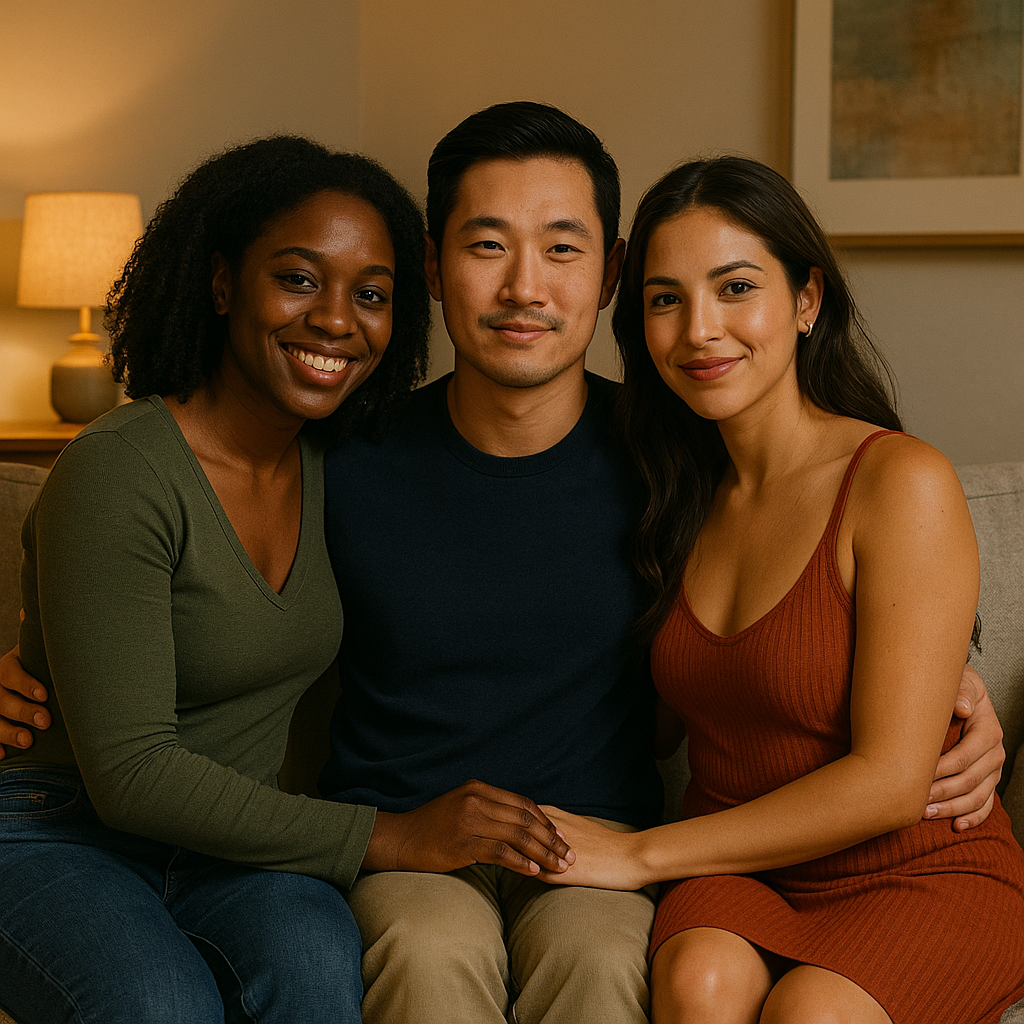
The History Of Polyamory

Polyamory might feel like a modern buzzword, but the idea of loving more than one person openly and consensually has deep roots across history. Humans have experimented with relationship structures for centuries—polyamory is simply a modern expression of an age-old concept.


Ancient Roots

  • Early Societies: Many Indigenous cultures around the world recognized non-monogamous practices, often tied to community living and shared responsibility.
  • Greek & Roman Traditions: While marriage often served political or economic purposes, emotional and sexual relationships outside marriage were common and sometimes celebrated.
  • Hindu Epics: Texts like the Mahabharata depict characters with multiple spouses and complex love bonds.


Non-Monogamy in Different Cultures

  • Africa & the Middle East: Polygamy (one person, multiple spouses) has existed for centuries, though it differs from modern polyamory since it often involves hierarchy and not always mutual choice.
  • Native American Traditions: Some tribes had flexible structures, where relationships were not bound to monogamous norms.
  • Pacific Islands: Group marriages and communal parenting were practiced in certain societies.


The Modern Term “Polyamory”

  • The word “polyamory” combines Greek poly (many) and Latin amor (love).
  • It gained popularity in the 1990s as communities of ethical non-monogamists sought a positive word to describe loving multiple partners openly.
  • Unlike polygamy, polyamory emphasizes consent, equality, and choice.


Polyamory in Today’s World

  • The 1960s sexual revolution challenged traditional monogamy, paving the way for open relationships and eventually polyamory.
  • Today, polyamory is increasingly visible in media, books, and pop culture, helping normalize it as a valid relationship choice.


Polyamory isn’t new—it’s a modern name for something humans have practiced in different forms for thousands of years. What makes today’s polyamory unique is its emphasis on consent, communication, and equality. Far from being a trend, it’s part of humanity’s long and diverse history of love.

Leave a Reply

Your email address will not be published. Required fields are marked *

Facebook
Twitter
LinkedIn